

In the competitive world of early stage SaaS, product led growth experiments drive user acquisition and retention without heavy reliance on sales teams.
These experiments empower your product to sell itself through seamless onboarding and viral features. This guide explores actionable strategies to test and scale PLG for startups.
What Is Product Led Growth for Early Stage SaaS?
Product led growth (PLG) flips traditional sales funnels by making the product the primary driver of acquisition, activation, and expansion. For early stage SaaS companies with limited budgets, PLG experiments focus on iterative tests that boost free-to-paid conversions.
ADVERTISEMENT
Early adopters self-serve, share the product organically, and upgrade based on value realized in minutes. Unlike B2B sales-led models, PLG thrives on low-friction experiences tailored to solopreneurs or small teams.
Why Run PLG Experiments in Early Stages?
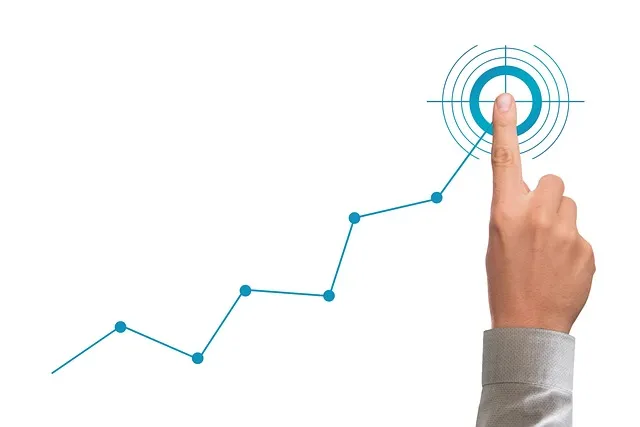
Bootstrapped SaaS startups benefit most from PLG experiments due to constrained resources. These tests validate assumptions quickly, often yielding 2-5x improvements in metrics like activation rate or trial-to-paid conversion.
Common pitfalls include overbuilding features without user validation. Experiments mitigate this by prioritizing high-impact changes, such as simplifying sign-up flows. Data shows PLG adopters like Slack scaled to millions by nailing these early tests.
Essential Metrics to Track in PLG Experiments
Success hinges on monitoring key PLG metrics before and during tests:
- Activation Rate: Percentage of sign-ups completing a “wow” moment, like first task success.
- Trial-to-Paid Conversion: Users upgrading post-trial, ideally 15-25% for early stage.
- Viral Coefficient: (Invites per user) x (Conversion rate of invites) > 1 for growth.
- Time to Value (TTV): Minutes or hours to core value realization.
- Churn Rate: Weekly/monthly user loss, targeting under 5% for free tiers.
Use tools like Mixpanel or Amplitude to A/B test variations and segment by cohort.
Top 10 Product Led Growth Experiments for Early Stage SaaS
1. One-Click Onboarding Flow
Test removing friction from sign-up by enabling social logins or magic links. Experiment variant: Skip email verification for instant access to a demo dashboard.
Expected lift: 20-40% in activation. Run for 2 weeks with 1,000 visitors per variant.
2. In-App Milestone Celebrations
Trigger confetti animations or badges after key actions, like “First project created!” Pair with upsell modals for premium templates.
This boosts dopamine hits, increasing session length by 30%. Track completion of 3-day activation sequences.
3. Free Tier Power-Ups
Limit free plans strategically (e.g., 3 projects max) then offer one-click upgrades during high-usage moments. Test contextual CTAs like “Unlock unlimited for $9/mo.”
Conversion jumps 15% when tied to pain points. Monitor upgrade timing post-limit hit.
4. Viral Invite Loops
Embed “Share with team” buttons after collaborative features. Experiment with pre-filled invite emails offering referral credits.
Aim for k-factor >1. Slack’s playbook started here, growing 30% MoM.
5. Personalized Onboarding Tours
Dynamic tours based on user role (e.g., marketer vs. dev). A/B test tooltips vs. full-screen modals.
Reduces drop-off by 25%. Use Intercom or Appcues for quick implementation.
6. Feature Flag Rollouts
Release beta features to 10% of users via flags. Gather NPS feedback inline, then iterate.
This de-risks launches. Notion used it to refine AI tools rapidly.
7. Usage-Based Nudges
Email or in-app prompts for dormant users: “Your dashboard misses you—here’s a quick win.” Test timing (day 3 vs. day 7).
Re-activation rates hit 10-20%. Segment by last login.
8. Collaborative Templates Marketplace
Curate user-generated templates in-app. Users remix and share, driving virality.
Test gating premium ones. Dropbox grew via similar shared folders.
9. Gamified Progress Bars
Show “80% to Pro” bars based on usage tiers. Unlock badges for milestones.
Engagement lifts 35%. Track progression to paid thresholds.
10. Exit Surveys with Win-Back Offers
On churn, pop micro-surveys: “What stopped you?” Offer 50% off first month.
Recovers 5-10% of lost users. Feed insights to product roadmap.
Step-by-Step Guide to Launching PLG Experiments

- Hypothesize: Pick one metric, define success (e.g., +15% activation).
- Build Variants: Use no-code tools like GrowthBook for A/B splits.
- Run Test: 1-4 weeks, minimum 100 conversions per variant.
- Analyze: Statistical significance via t-tests; segment by source.
- Scale Winners: Roll out to 100%, monitor for 30 days.
- Document: Update playbook for team handoff.
Prioritize experiments with highest expected impact x confidence score.
Common Mistakes to Avoid in Early Stage PLG
Overcomplicating free tiers dilutes value—keep TTV under 5 minutes. Ignoring mobile users tanks 40% of potential activations. Neglecting qualitative feedback leads to misguided iterations; always pair analytics with user interviews.
You Might Like: SaaS Onboarding Checklist for New Customers
FAQ
What is the fastest PLG experiment for SaaS startups?
One-click onboarding tests yield quickest wins, often live in hours with tools like Clerk.dev.
How much budget for early stage PLG tools?
Start free with PostHog or Plausible; scale to $100-500/mo for Amplitude as ARR hits $10k.
Can PLG work for enterprise SaaS?
Yes, hybrid PLG-sales models succeed, as seen with Calendly’s self-serve tiers.
What’s a good viral coefficient for early SaaS?
Above 1.0 sustains growth; aim for 0.3 initially via invites and content shares.
How to measure PLG ROI?
Track LTV:CAC ratio >3:1, with PLG reducing CAC to near-zero for organic users.
Best resources for PLG experiment ideas?
OpenPlaybook.com, Reforge PLG course, and Lenny’s Newsletter case studies.
ADVERTISEMENT
Master these product led growth experiments to fuel sustainable scaling in your early stage SaaS. Start with one test this week—track results and iterate relentlessly. Ready to implement? Book a free strategy call or download our PLG playbook template.


1 Comment
Pingback: SaaS Churn Reduction Strategy for Small Teams - EZY Journeys